

SWARMHIVE OS
The Operating System for Attritable Mass
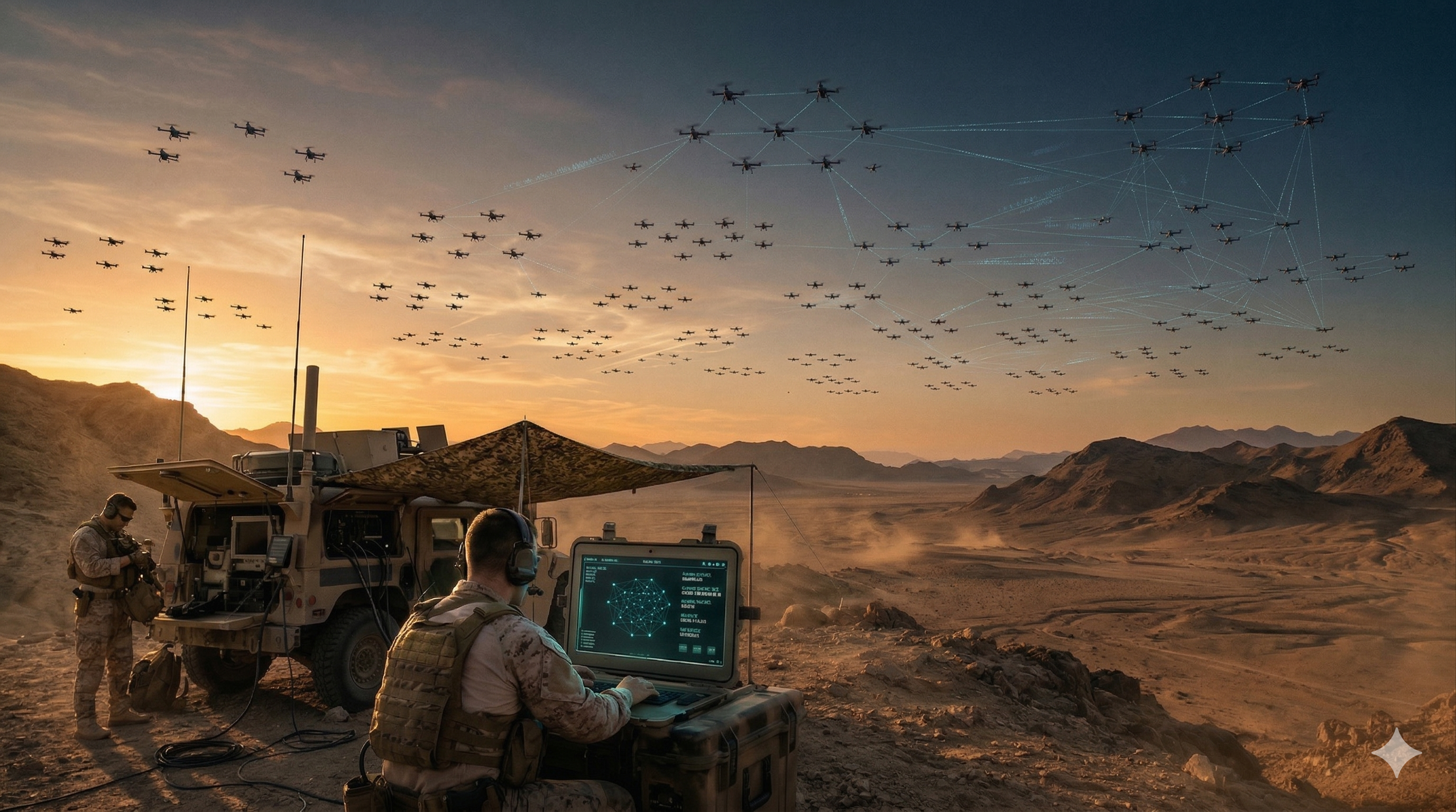
Middleware layer enabling 50-500 heterogeneous drones to operate in GPS-denied, RF-contested environments. Stigmergic virtual pheromone coordination, adversarial role-switching, and attrition-resilient topology reconvergence.
The Coordination Gap
Current drone swarms rely on centralized control and constant communications, making them vulnerable to GPS jamming, RF interference, and single-point failure.
When the Link Breaks, the Swarm Fragments
Current drone swarms rely on centralized control and constant communications, making them vulnerable to GPS jamming, RF interference, and single-point failure. When the link breaks, the swarm fragments and mission fails.
Military operators need swarms that can operate autonomously in contested environments, adapt to platform attrition, and maintain mission effectiveness even when individual units are lost.
Cost of Inaction
Without resilient coordination, expensive drone swarms become liabilities in contested environments, wasting millions in hardware and compromising mission success.
Biologically-Inspired Swarm Intelligence
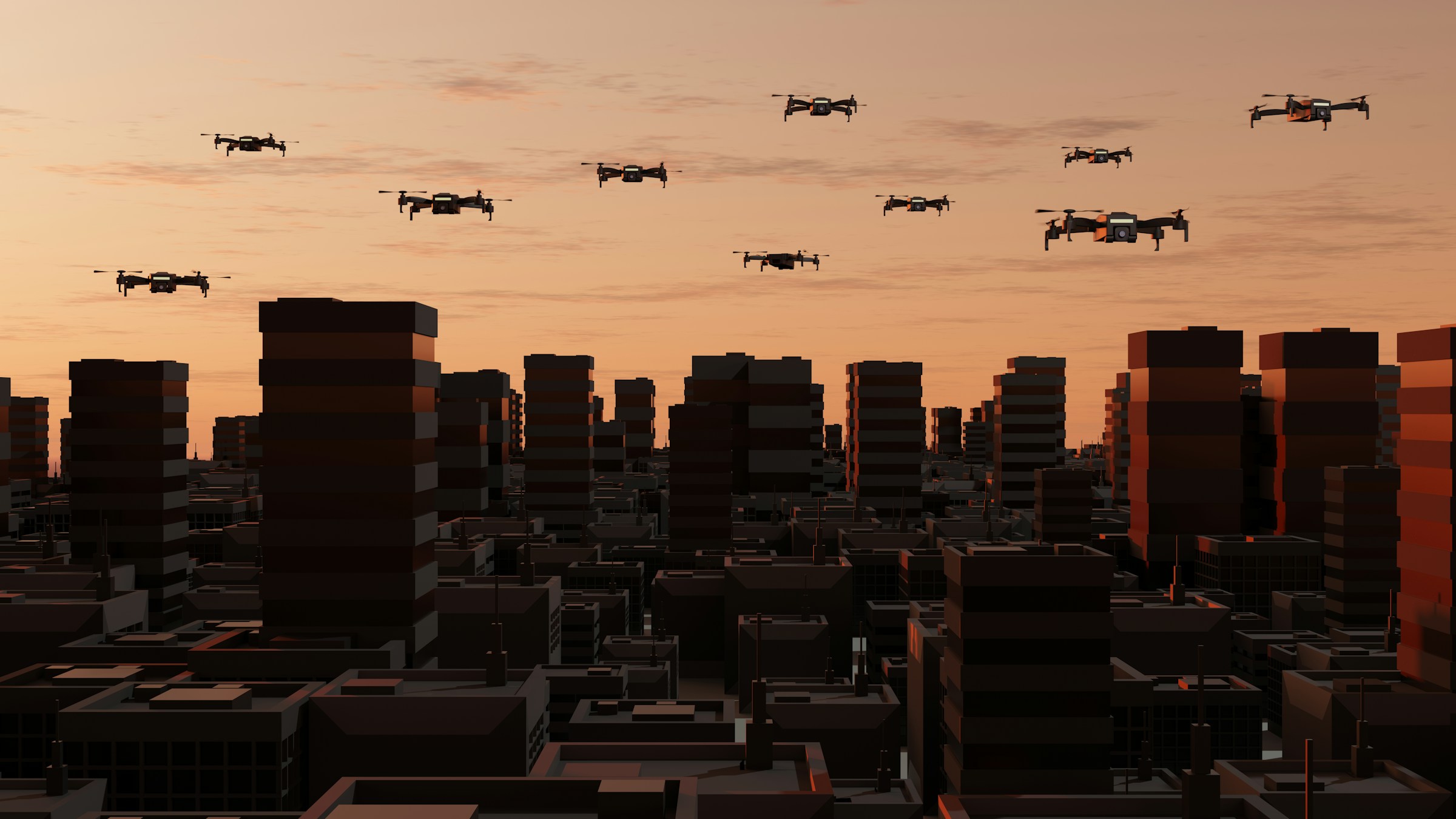
SwarmHive OS transforms a collection of drones into a resilient, self-organizing swarm using stigmergic coordination inspired by insect colonies - no centralized control required.
Virtual Pheromone Coordination
Drones leave digital "scent trails" that guide swarm behavior, enabling decentralized task allocation and path optimization without any central controller.
Adversarial Role-Switching
Platforms dynamically assume new roles when others are lost, maintaining swarm capability through continuous reconfiguration. No single drone is indispensable.
Topology Reconvergence
Network automatically heals and restructures after attrition, maintaining communications and coordination with sub-second reconvergence time.
Four-Layer Swarm Stack
The architecture behind resilient swarm coordination - from biological algorithms to hardware abstraction.
Architecture Layers
Layer 1: Stigmergic Engine
Virtual pheromone field management for decentralized coordination. Digital scent trails encode task priority, area coverage, and threat avoidance.
Layer 2: Role Manager
Dynamic task allocation and role switching based on swarm state. Platforms autonomously reassign roles when capabilities are lost to attrition.
Layer 3: Topology Controller
Network reconvergence and mesh healing algorithms. Sub-second topology repair after platform loss maintains communications integrity.
Layer 4: Hardware Abstraction
Platform-agnostic interface supporting heterogeneous drone types. No vendor lock-in - any compliant platform can join the swarm.
Technical Capabilities
- 50-500 drone scale - validated coordination across full operational range
- GPS-denied navigation - visual-inertial odometry & cooperative positioning
- 40% attrition tolerance - mission continuation through significant losses
- Sub-second reconvergence - rapid topology healing after platform loss
- RF-contested operation - designed for electronic warfare environments
- Heterogeneous platforms - mix fixed-wing, rotary, and ground vehicles
- Emergent collective intelligence - swarm behavior exceeds individual capability
- Zero single-point-of-failure - fully decentralized architecture
Transformative Use Cases
Coordinated swarms enabling new operational paradigms across military and defense applications.
Precision Strike
Coordinated attacks overwhelming enemy defenses with massed, low-cost platforms. Saturating air defenses with distributed, attrition-tolerant swarms that adapt in real-time.
Distributed Sensing (ISR)
Wide-area intelligence, surveillance, and reconnaissance with redundant coverage and automatic gap-filling. Persistent awareness without single-platform dependency.
Communication Relay
Self-healing mesh networks extending operational range in contested environments. Swarm nodes autonomously reposition to maintain network coverage after losses.
Electronic Warfare
Distributed jamming and decoy operations with coordinated effects. Spatially distributed EW platforms create effects impossible for single-platform systems.
Why SwarmHive OS Wins
$100M+ military swarm procurement market growing at 45% CAGR. $35M serviceable addressable market in swarm coordination software.
Biological Inspiration
Stigmergic algorithms proven across millions of years of evolution in insect colonies. Nature's coordination patterns, engineered for machines.
Platform Agnostic
Works with any drone hardware - no vendor lock-in. Heterogeneous swarms mixing fixed-wing, rotary, and ground platforms in a single coordinated operation.
Contested Environment Native
Designed from the ground up for GPS-denied, RF-contested operations. Not a peacetime tool adapted for war - built for the hardest environments first.
200:1 Cost Advantage
$50K drone swarm delivers effects of $10M missile systems. Asymmetric cost advantage that scales - attritable by design, not by accident.

Revenue Architecture
Per-Platform License
Per drone per mission software license. Scales linearly with swarm size and mission tempo.
Enterprise License
Annual unlimited deployment license for military branches and defense contractors.
Integration Services
Per platform type integration. Custom HAL development for new drone hardware.

Asymmetric Cost Advantage

Path to Operational Deployment
Development path from validated simulation to production deployment with Army Futures Command.
Core Algorithm Validation
Stigmergic coordination engine validated in simulation. Virtual pheromone field management and role-switching algorithms proven at scale.
50-Drone Flight Demonstrations
Live flight demonstrations with SOCOM. Real-world validation of GPS-denied coordination and attrition resilience.
500-Drone Contested Operations
Full-scale coordinated operations in contested electronic warfare environment. Multi-domain swarm integration validation.
Army Futures Command Integration
Operational integration with Army Futures Command. Production deployment across multiple theater commands.